
Austria is living through a femicide crisis, and the country treats it like the weather. The Association of Autonomous Austrian Women’s Shelters (AÖF) reported that twenty-six women were murdered in 2023. By mid-2024, fifteen more had been killed. Newspapers used the phrase “Blutbad im Bordell” (“bloodbath in the brothel”) after three women were murdered in a Vienna brothel in February 2024, as reported by the news site Watson. Such wording reduces femicide to lurid spectacle, as if deaths were entertainment rather than the result of misogyny and exclusion. Among the dead was Turkish trans woman Hande Öncü, who turned to sex work “through lack of alternatives” after being locked out of formal employment. She was strangled by a client in her Vienna apartment, as the LGBTQI+ news outlet Kaos GL documented in 2015. These women are not exceptions but casualties of a society that exploits women and queer people while pretending not to see their deaths.
From the beginning, women’s bodily labor has been pushed outside the realm of value. Silvia Federici showed in the 1970s that housework, unpaid and invisible, props up economies, yet is dismissed as “not real work.” Sex work is one of the few forms of feminized labor that is paid, and for that reason it is reviled. It is treated as the opposite of “respectable” work, regulated into illegality, surveilled, stigmatized, and criminalized. Both housework and sex work reveal the same perverse logic: society thrives on women’s labor while stripping it of legitimacy.
Sex work is not “just sex.” It demands skill, strategy, and discipline. A good sex worker reads a client’s body, calibrates intimacy, negotiates boundaries, manages moods and sustains safe performances. This is labor, both physical and emotional. To deny that is to erase their expertise and discredit them. In Vienna, the migrant sex worker collective Red Edition has long insisted that sex workers are workers, no more and no less. As one member put it in 2021, registration feels “like being branded as dirty. We are forced to register with police, but when we are attacked, no one listens to us.” Lizzie Borden’s film Working Girls (1986) understood this, portraying women who clock in, argue with their boss over wages, and navigate the everyday negotiations of their labor. Work, boredom, care and calculation, not melodrama.
Most cinema, however, is too cowardly to show that truth. Sean Baker’s Anora (2024), though decorated with festival prizes, is a hollow spectacle dressed as compassion. The Guardian praised it as “fierce and funny” with “rich character development.” The streaming site Decider said much the same. But what “richness” are they talking about? Ani, the film’s sex worker protagonist, is denied any inner life that cannot be reduced to sex. In one of the film’s most telling scenes, she breaks down sobbing, yet even that moment is still about sexual intimacy, as if a sex worker’s only way to feel is through her body’s availability. Critic Ayanna Dozier wrote in 2025 that the lack of characterization makes it impossible to grasp Ani’s inner world. Critics call this depth, but it is blindness. Anora does not challenge stigma but reaffirms it, smoothing over violence so audiences can feel enlightened while consuming yet another “tragic whore” fantasy.
Set against this, Baker’s own Tangerine (2015) is messy, furious, alive, and gives trans sex workers humor, rage, and bonds of solidarity. Lizzie Borden’s Working Girls went further, shredding the myth that sex work is an inevitable spiral into ruin. It showed what critics refuse to see: sex work is labor, entangled with rent, childcare, exhaustion, and survival. Borden’s women are human beings. Baker’s Ani is a puppet built from stigma.
The Austrian state completes the degradation. Politicians boast that sex work is legal, but their laws read more like a punishment: forced registration with the police, compulsory medical inspections and constant surveillance. In 2021, Amnesty International Austria documented that these are not safeguards but shackles. One migrant sex worker put it bluntly: under Austria’s regime they face countless obligations but “disproportionately few rights.” In 2020, roughly 8,000 people were officially registered as sex workers, but NGOs estimate thousands more remain unregistered due to stigma and fear. Migrant and trans workers are punished twice over, excluded from regular employment, then left unprotected when survival pushes them into sex work. For all the government’s talk of legalizing prostitution to differentiate their policy from outright bans or the Nordic model which criminalizes clients, the outcome is no better. Only full decriminalization, as in New Zealand, reduces violence and exploitation. The Austrian solution is not regulation but stigma that hands sex traffickers the perfect conditions for exploitation.
After violence occurs, the media completes the cycle of dehumanization. Too often, stories of murdered sex workers are reduced to titillation or moral lessons. ORF once reported that a woman’s rejection of a man “must have resulted in her death.” That is not journalism but collaboration with misogyny. Austria’s newspapers stage femicide as scandal while refusing to call it what it is: systemic misogynistic violence.
Simone de Beauvoir wrote in The Second Sex (1949) that prostitutes are cast as sacrificial figures so that “respectable” women can imagine themselves safe. Austrian tabloids play directly into this idea when they frame brothel killings as a lurid exception, reassuring the public that violence is confined to a shadow world rather than woven into everyday gender relations. Judith Butler showed in 2004 that when certain lives are written out of the circle of those who matter, their deaths barely count as losses. We see this whenever murdered sex workers are described as “bodies,” rather than women with families, histories, and rights. Their ungrievability is not accidental but political. Simone de Beauvoir diagnosed the same dynamic decades earlier, arguing that society thrives on women marked as outsiders so others can feel secure. Each headline becomes part of an economy of spectacle: death as drama, stigma as profit, failure hidden behind scandal.
Recognition is the only way forward. Sex work must be named for what it is: skilled labor requiring patience, resilience, and survival in a hostile world. Workers deserve protection, not police harassment; healthcare, not surveillance; rights, not erasure. Migrants and trans women must be given security, not left to be preyed upon by clients and traffickers with state permission.
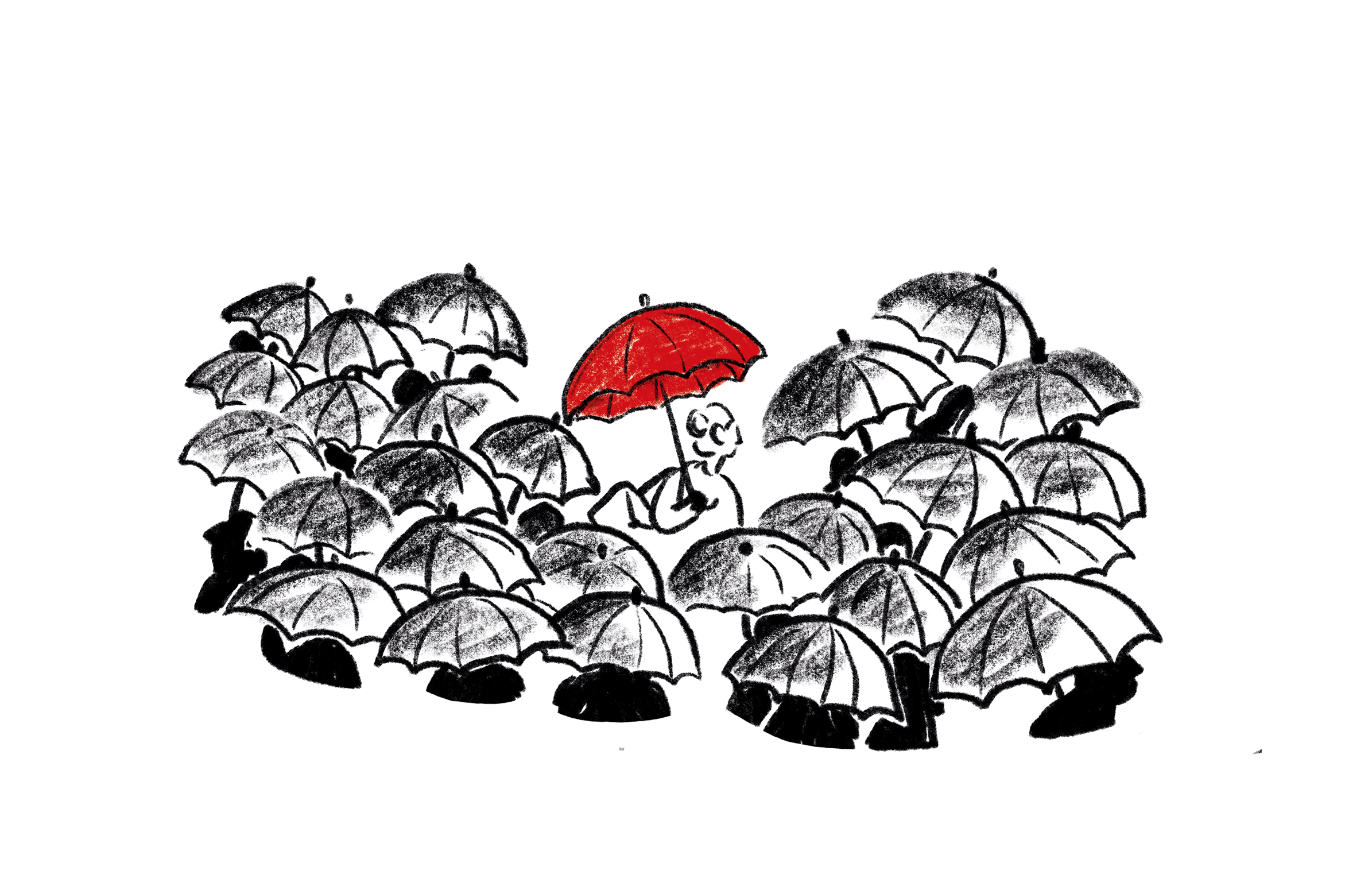
Culture must change, too. We need to stop dressing up old stereotypes as art and applauding hollow portrayals like Anora that confirm our prejudices. If you want nuance, watch Working Girls. If you want to hear sex workers, listen to Red Edition, who march under the red umbrella and insist on one simple truth: sex work is work, and workers’ lives matter.
Austria cannot pretend this is just tragedy. It is policy. The ÖVP and FPÖ push crackdowns that punish workers while protecting brothel owners. The state collects taxes but denies rights or sick leave. Tabloids profit from striking headlines while ORF sanitizes femicide as “relationship drama.” Even feminists have failed, often moralizing about trafficking instead of defending workers’ rights.
The demands are clear: decriminalization, the right to organize, firewalls against deportation, and media accountability that names femicide. Anything less is collaboration with killing. Until sex work is recognized as labor and sex workers as human, every new headline about a woman’s death will have been written in advance. And every critic, every editor, every politician who claps for the spectacle has blood on their hands.
Sources:
Amnesty International Österreich. (2021). Solidarisch mit Sexarbeiter_innen. www.amnesty.at
De Beauvoir, S. (1949). The Second Sex. Gallimard.
Dozier, A. (2025). The 24 Hour Working Girl. UltraDogme.
Kaos Gl. (2015). Trans woman from Turkey was killed in Vienna. www.lgbtinewsturkey.wordpress.com
Red Edition. (2021). Press release on International Sex Workers’ Day. www.rededition.wordpress.com
Mehrta Shirzadian studies Art & Science at the University of Applied Arts Vienna.